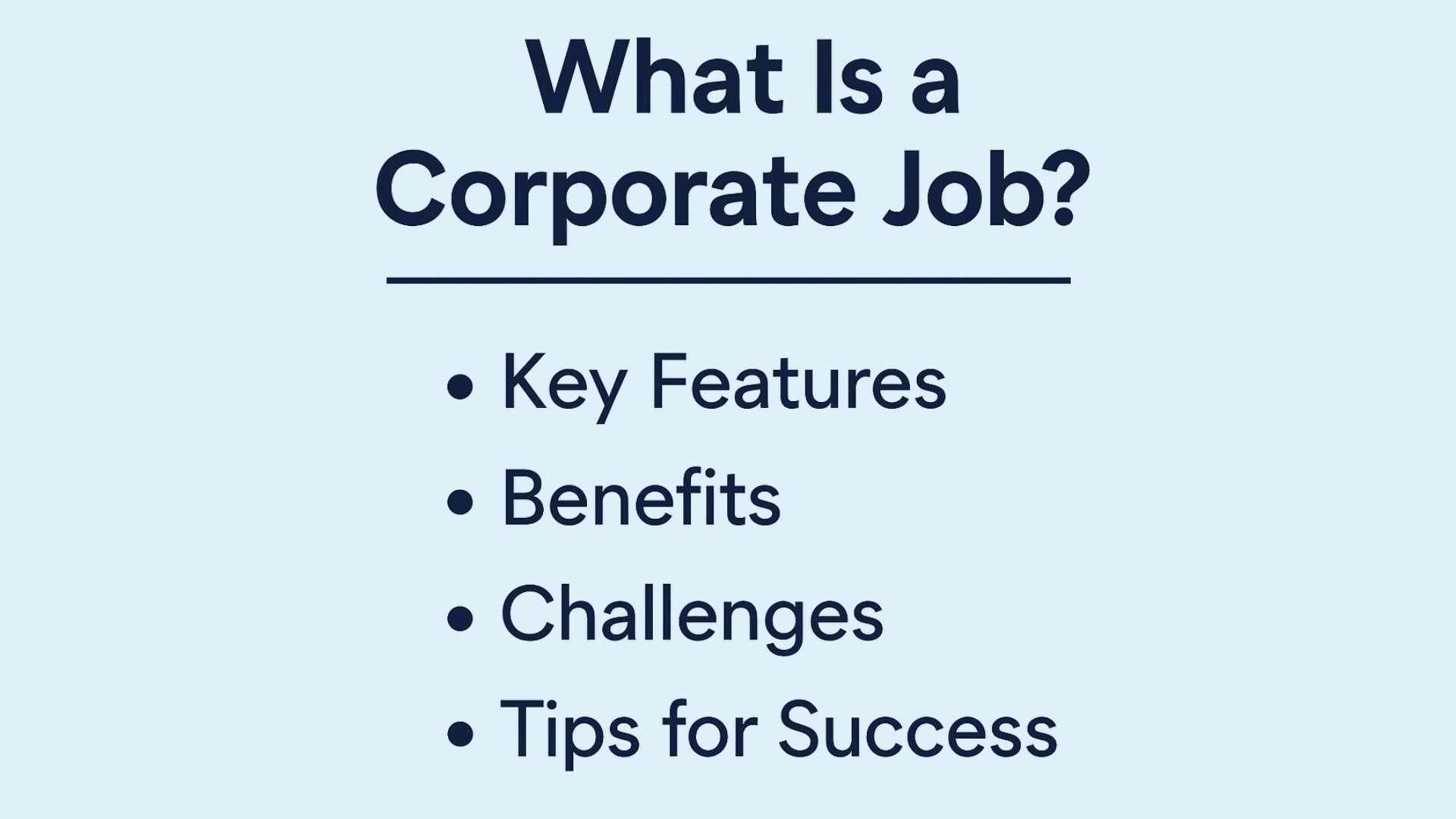
What Is a Corporate Job? A Complete Guide to Corporate Careers
Introduction: What Is a Corporate Job?
If you have ever asked yourself what is a corporate job, you’re not alone. Many people see corporate jobs as stable and rewarding career options but may not fully understand what working in the corporate world actually entails.
Simply put, a corporate job is any employment position within a large business or organization that operates with a formal structure, hierarchy, and set procedures.
These jobs span a variety of industries such as finance, marketing, human resources, operations, and management.
This article will explore what a corporate job means, its key characteristics, types, advantages, challenges, skills required, and how to prepare for a successful corporate career.
Key Characteristics: What Is a Corporate Job Like?
Understanding what is a corporate job means looking beyond the job title to the environment and culture. Corporate jobs are typically characterized by:
- Structured Hierarchy: Employees work within a clearly defined chain of command. Roles and responsibilities are specified so everyone knows their place and reporting lines.
- Formal Work Environment: Corporate jobs usually take place in office settings where formal dress codes and professional behavior are expected.
- Defined Career Paths: Corporations often offer clear progression ladders, from entry-level roles to senior leadership positions, providing long-term career opportunities.
- Collaboration: Working in teams is common, with interdepartmental communication essential to achieve company goals.
- Performance Monitoring: Employee output is tracked through goals, targets, and regular performance reviews.
- Benefits and Perks: Many corporate roles provide health insurance, retirement plans, paid leave, and other benefits.
Types of Corporate Jobs
Knowing what is a corporate job also means understanding the wide variety of roles available. Some common corporate job categories include:
- Finance and Accounting: Roles focused on managing budgets, audits, financial reporting, and investment analysis.
- Marketing and Sales: Jobs that involve advertising, market research, customer relations, and driving revenue growth.
- Human Resources (HR): Positions managing recruitment, employee relations, benefits administration, and training.
- Operations and Logistics: Overseeing supply chains, production processes, and day-to-day company functioning.
- Information Technology (IT): Supporting technology infrastructure and software solutions.
- Executive and Management: Senior roles responsible for strategy, decision-making, and leadership.
Each job type plays a vital role in helping the corporation achieve its objectives.
Benefits of Working in a Corporate Job
People often wonder what is a corporate job because of the many benefits it can offer. These advantages typically include:
- Job Stability: Large companies often provide more secure employment compared to startups or freelance work.
- Regular Salary and Benefits: Corporate jobs usually offer steady paychecks along with health insurance, retirement plans, bonuses, and paid time off.
- Professional Growth: Many companies invest in employee development through training programs, workshops, and mentoring.
- Networking Opportunities: Working in a corporate setting exposes you to professionals across many departments and industries.
- Resources and Technology: Access to advanced tools, software, and support that can improve productivity.
- Clear Work Structure: Defined job descriptions and expectations help employees focus on their responsibilities.
Challenges of Corporate Jobs
Despite the benefits, it’s important to know the challenges associated with corporate roles when exploring what is a corporate job:
- Office Politics: Navigating relationships and power dynamics can be stressful and requires emotional intelligence.
- Work Pressure: Deadlines, targets, and performance metrics can create a high-pressure environment.
- Limited Flexibility: Some corporate jobs have strict schedules and policies that may limit work-life balance.
- Bureaucracy: Formal procedures and multiple approval layers can slow decision-making and innovation.
- Competition: Advancement opportunities might be competitive, requiring continuous skill improvement.
Essential Skills for Corporate Jobs
To thrive after understanding what is a corporate job, certain skills are essential:
- Strong Communication: Clear verbal and written communication facilitates teamwork and client interaction.
- Teamwork and Collaboration: Being able to work effectively with colleagues across departments is crucial.
- Time Management: Prioritizing tasks and meeting deadlines ensures productivity.
- Problem-Solving: Finding practical solutions to challenges is highly valued.
- Adaptability: Being open to change and learning new tools or processes helps you stay relevant.
- Professionalism: Maintaining appropriate behavior, dress code, and work ethic enhances your reputation.
How to Prepare for a Corporate Job
If you want to start a career in the corporate world and wonder what is a corporate job, here are steps to prepare:
- Education: Obtain relevant degrees or certifications related to your desired field (e.g., business administration, marketing, finance).
- Internships and Entry-Level Roles: Gain practical experience through internships or junior roles to understand corporate culture.
- Skill Development: Improve skills such as communication, computer literacy, and project management.
- Networking: Connect with professionals via LinkedIn, industry events, or company open days.
- Research Companies: Learn about potential employers, their values, and career opportunities.
- Stay Updated: Keep abreast of industry trends and corporate news to remain competitive.
Conclusion
So, what is a corporate job? It is a professional role within a structured, often large, business organization that comes with distinct benefits and challenges.
Corporate jobs require specific skills and offer opportunities for career growth and stability. By understanding the nature of corporate roles and preparing accordingly, you can position yourself for success in the corporate world.